 Jay
JayIndia’s logistics sector faces significant structural challenges. The market, valued at approximately $215 billion annually with 7% yearly growth, remains largely unorganized — only 10–15% operates formally. Logistics costs consume 12–14% of India’s GDP, substantially higher than developed nations. A mere 9% cost reduction could save $50 billion.
Key Industry Problems
- Indian trucks operate only 15–16 days monthly due to delays and underutilization
- Daily travel distances average 300 km (versus 500–600 km globally), with 40% empty running time
- 2–3 intermediaries exist between driver and shipper; truck owners lose 15–20% of revenue to commissions
- Limited technology adoption across transport and warehousing sectors
- High indirect costs from unpredictable supply chains and weak first/last-mile connectivity
National Objectives
India’s “Atma Nirbhar Bharat” logistics vision targets:
- Reducing logistics costs to global competitive levels by 2030
- Achieving a top-25 ranking on the Logistics Performance Index by 2030
- Creating data-driven decision mechanisms for ecosystem efficiency
What is the Unified Logistics Interface Platform?
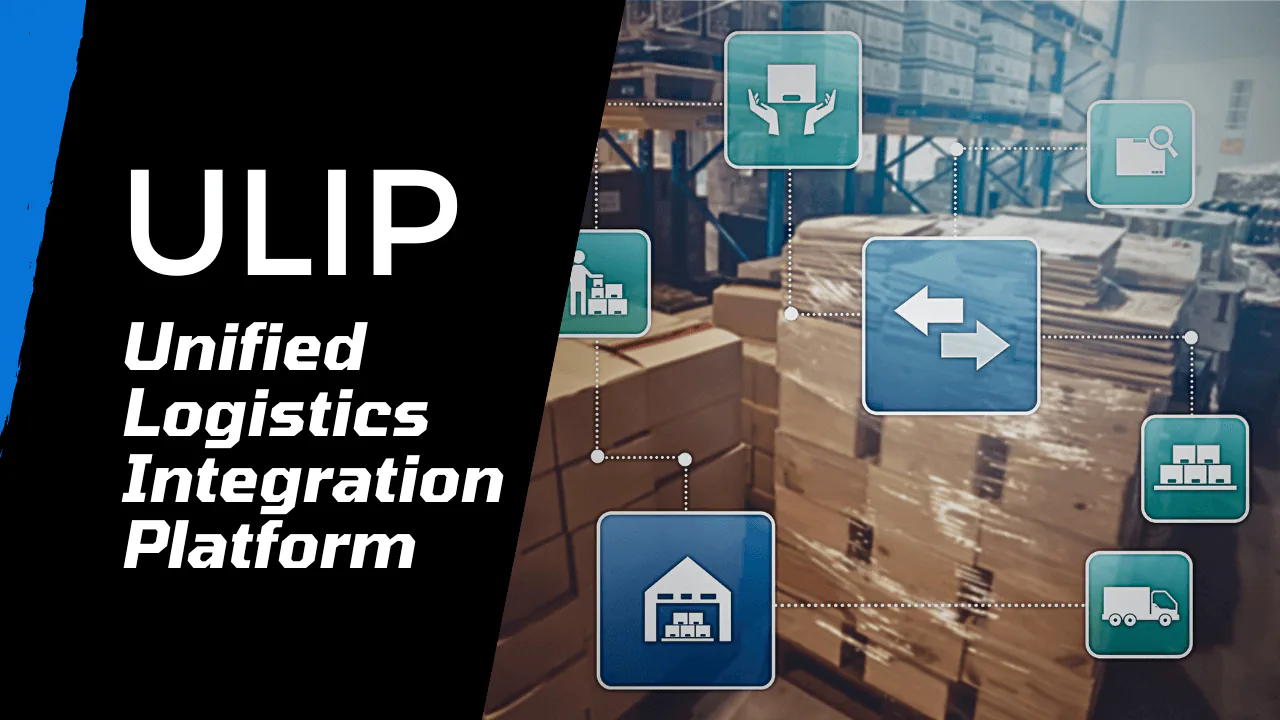
ULIP stands for Unified Logistics Interface Platform. Developed through NICDC’s Logistics Data Bank Project, it aligns with PM GatiShakti’s comprehensive goals and addresses the delayed processes and manual activities plaguing India’s logistics sector.
Core Objectives
- Connect individual silos and integrate various Ministries and Departments
- Establish a unified contact point within the logistics industry
- Reduce time constraints, improve efficiency, foster transparency, and provide transport mode visibility
- Enable optimal transport mode usage and ensure cost competitiveness
- Enable real-time confidential information exchange among stakeholders
- Simplify complex processes including compliance, document filing, certification, and approvals
What are the Components of the Unified Logistics Interface Platform?
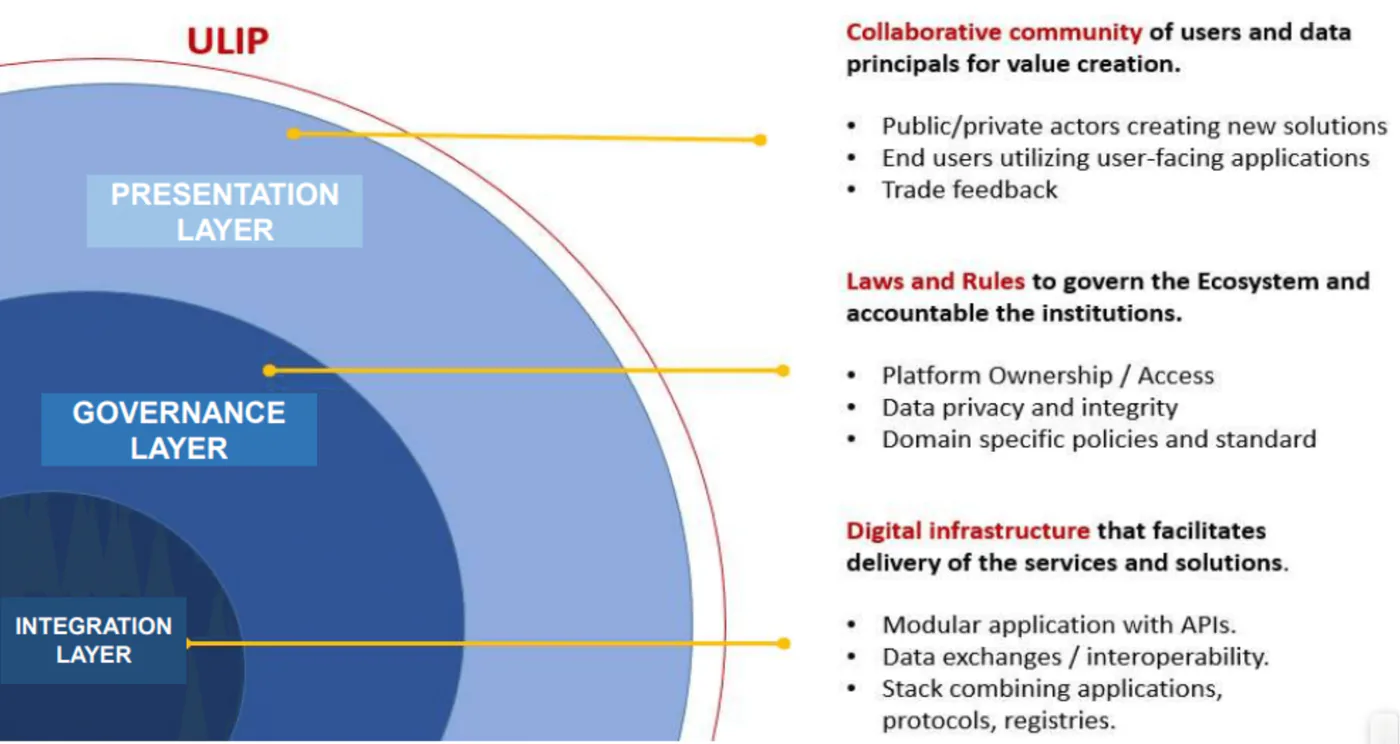
ULIP operates as an open-source platform with a three-tier architecture:
1. Governance Layer – Data merger with government ministries
Ensures swift consensus and streamlined approval mechanisms.
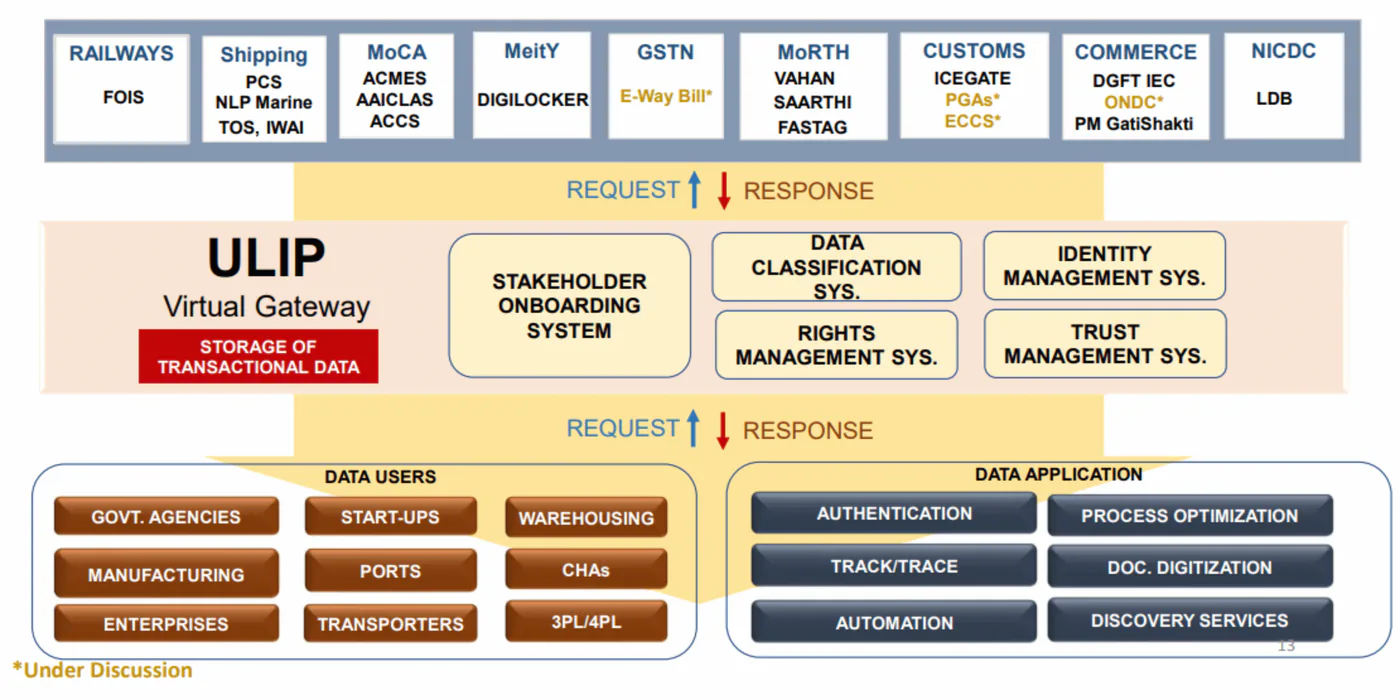
- Integrates over 30 logistics systems from seven ministries/departments covering 1,600 fields through 102 APIs
- Ensures compliance, data privacy, and integrity
- Authenticates every transaction
2. Presentation Layer – Sharing information with private stakeholders
Facilitates data exchange (shipping, dispatch, distribution) between private players, supply chain service providers, and businesses.
- Developed with private sector input to address industry problems
- Creates solutions addressing real industry challenges
- Functions as the end-customer interface
3. Integration Layer – Supply chain documentation
Creates unified platforms for all digitized documentation processes.
- Enables data exchange between data principals and users
- Operates through API integration
- Facilitates data exchange and interoperability
What are the Benefits of ULIP for Various Stakeholders?
Benefits to Ministries
- Support inter-ministry collaboration and reduce repetitive formalities, easing the doing of business
- Serves as an infrastructure planning tool for logistics construction
- Enables international competitiveness through data and process digitization
- Attracts private partners to maximize transportation mode usage
Benefits to Load Owners
- Enables “just in time” inventory management
- Provides real-time cargo movement tracking on a unified platform
- Identifies cost-effective logistics modes
Benefits to Truck Drivers
- Identifies demand locations
- Reduces empty truck movement
- Ensures fair service pricing
Benefits to Online Service Providers
- Simplifies documentation processes
- Enables accurate pricing, avoids unnecessary costs, and optimizes labor
- Provides value-added end-user services
How Will ULIP Boost the Logistics Sector’s Efficiency?
ULIP integrates three critical datasets:
E-Way Bill
The e-way bill is an electronic document under the GST regime required for consignments exceeding Rs 50,000. It contains invoice numbers, goods values, supply locations, and transportation details.
- Fully online; enables paperless movement tracking across multiple states
- Quick turnaround with anytime/anywhere data access
- Minimizes physical interactions with government departments
- Provides a unified e-way bill for both inter and intra-state movement
- Improves tax administration checks and simplification
- Supports multiple e-way bill creation methods
FASTag
An RFID-based electronic toll collection system operated by 23 banks under NPCI and NHAI governance using Radio Frequency Identification (RFID) technology.
- Windshield-mounted tags linked to prepaid accounts
- Automatic toll deductions via RFID at gates eliminate pit stops
- Prepaid account transactions enable convenient payments
- Saves fuel and time; reduces toll plaza congestion
- Easy expense tracking with SMS/email transaction alerts
- Additional coverage includes emergency road assistance and accidental death benefits
Market-hired trucks comprise 80% of transportation assets. SIM-based tracking proves unreliable; FASTag-based tracking provides reliable, cost-effective fleet monitoring superior to traditional methods.
MORTH Vahan / Sarathi
Ministry of Road Transport and Highways software standardizing 1,300+ Road Transport Offices nationwide, deployed by the National Informatics Centre (NIC).
Vahan module: Processes all vehicle registration transactions.
Sarathi module: Handles driving license and related activities.
Benefits
- Citizens access the Parivahan Sewa Portal for learner’s license, driving license applications, detail changes, and tax/fee payments
- Eliminates the need for transport office visits; all State Transportation Department services available online
- Time and cost savings for citizens
- Transporters renew National Permits for Goods Vehicles online via the portal
- Downloadable permits via ePayment system
- Traffic officers quickly access vehicle information
- Assists investigating agencies in detecting document forgery, misuse, and interstate vehicle racketeering
Because 80% of trucks are hired from the market, there is an increase in digital fraud in India’s logistics sector. Digital fraud is rampant on online marketplaces such as Vahak, TruckSuvidha, and Blackbuck. Currently, truck and driver KYC is done manually by checking the RC copy of the truck owner and the driver’s driving license. With ULIP integration, the truck owner’s name can be validated using the Vahan API or Sarathi API by submitting the truck number or driver’s license number.
Conclusion
The Unified Logistics Interface Platform represents India’s Digital India campaign in full evolution. We, at FR8 online booking platform, take advantage of technological advancements to provide better services to our clients. Platforms that leverage technological advancement provide enhanced client services while benefiting all ecosystem participants — from ministries and shippers to truck drivers and online service providers.