 Yoga Laxmi
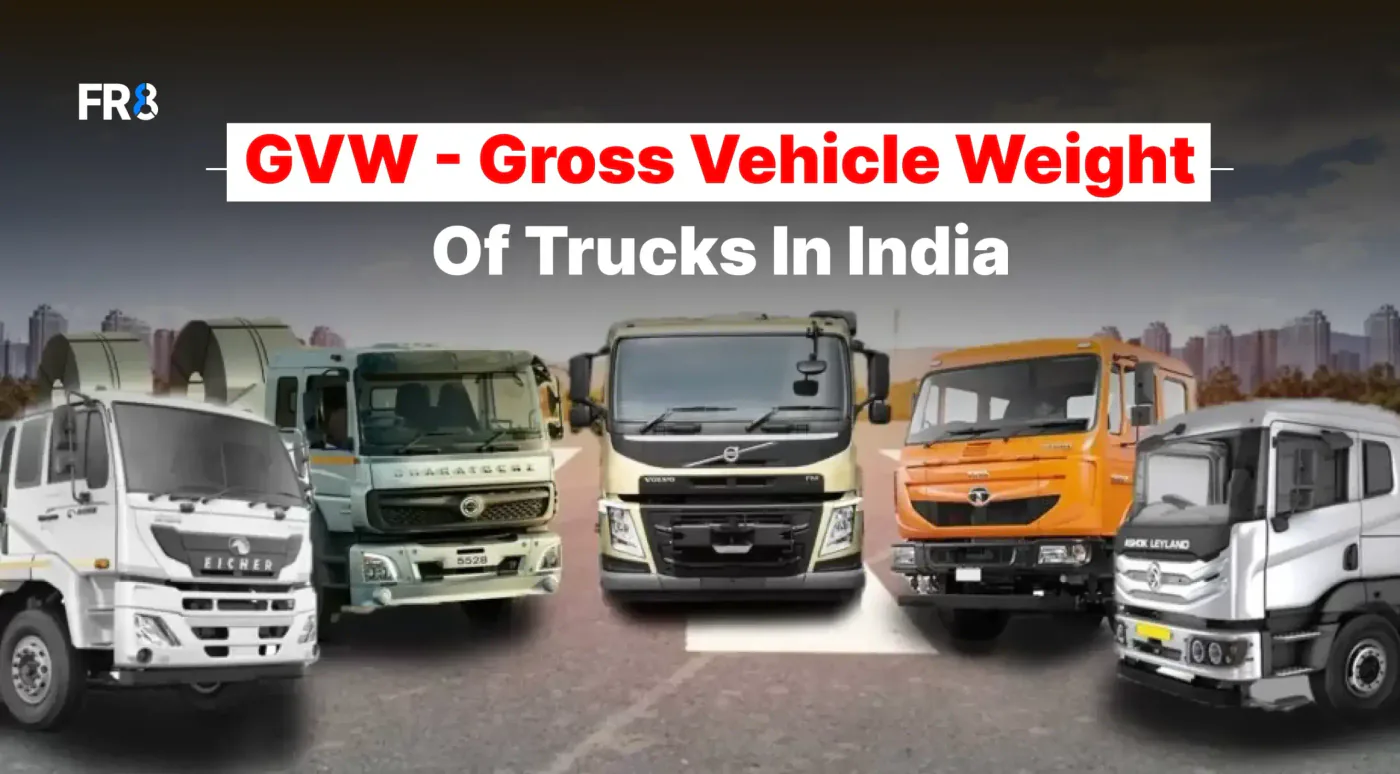
GVW stands for Gross Vehicle Weight, representing the combined weight of a truck when completely loaded. This includes:
- The unladen weight (chassis, body, engine, fluids, fuel, etc.)
- The driver and any passengers
- The cargo or payload
Formula:
GVW = Unladen Weight + Payload
This specification appears on a manufacturer’s nameplate affixed to the vehicle. Exceeding this limit constitutes a legal violation and can result in fines or vehicle confiscation.
Why is GVW Important?
- Legal Compliance: Indian regulations enforce strict GVW limits based on axle configurations to prevent overloading.
- Road Safety: Vehicles exceeding GVW limits face risks including brake failure, tire explosions, and structural harm.
- Optimized Fleet Planning: Accurate load limits help businesses avoid underutilization or overloading of trucks.
- Toll & Tax Classification: GVW determines toll rates and road taxation.
Revised GVW Limits by MoRTH (2018)
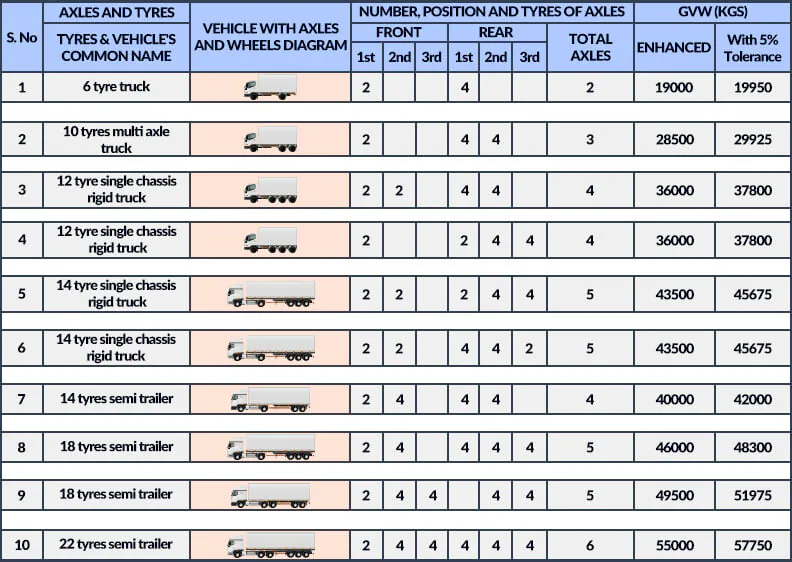
On July 16, 2018, the Ministry of Road Transport and Highways (MoRTH) updated Safe Axle Load Norms, increasing GVW limits across commercial vehicle categories. These values vary based on axle positioning and suspension type (mechanical versus air suspension).
GVW Vehicle Classification in India
| GVW Range | Vehicle Category |
|---|---|
| ≤ 3.5 Ton | N1 (Small CV) |
| 3.5 – 7.5 Ton | N2 (Light CV) |
| 7.5 – 12 Ton | N2B |
| 12 – 18.5 Ton | N3 (Medium Rigid Truck) |
| 18.5 – 28 Ton | N3B (Multi Axle Rigid) |
| 28 – 49 Ton | N3C (Multi Axle Rigid) |
| 30 – 55 Ton GCW | N3 Tractor + Trailer (TT) |
Tonnage Categorization Table as per OEMs
| Weight Range | Classification |
|---|---|
| Up to 3.5 Ton | Small Commercial Vehicle |
| 3.5 Ton – 8 Ton | Light Commercial Vehicle |
| 8 Ton – 16.2 Ton | Intermediate Commercial Vehicle |
| 18.5 Ton GVW | Medium Commercial Vehicle |
| 28 Ton – 49 Ton | Multi Axle Vehicle |
| 30 Ton – 55 Ton GCW | Tractor Trailer |
GVW vs GVWR vs Tare Weight vs Payload
| Term | Definition |
|---|---|
| GVW (Gross Vehicle Weight) | Actual loaded weight of the truck |
| GVWR (Gross Vehicle Weight Rating) | Manufacturer-rated maximum safe weight limit |
| Tare Weight | Unladen weight (without cargo or passengers) |
| Payload | Cargo weight = GVW – Tare Weight |
Common Truck Types & Payload Capacity
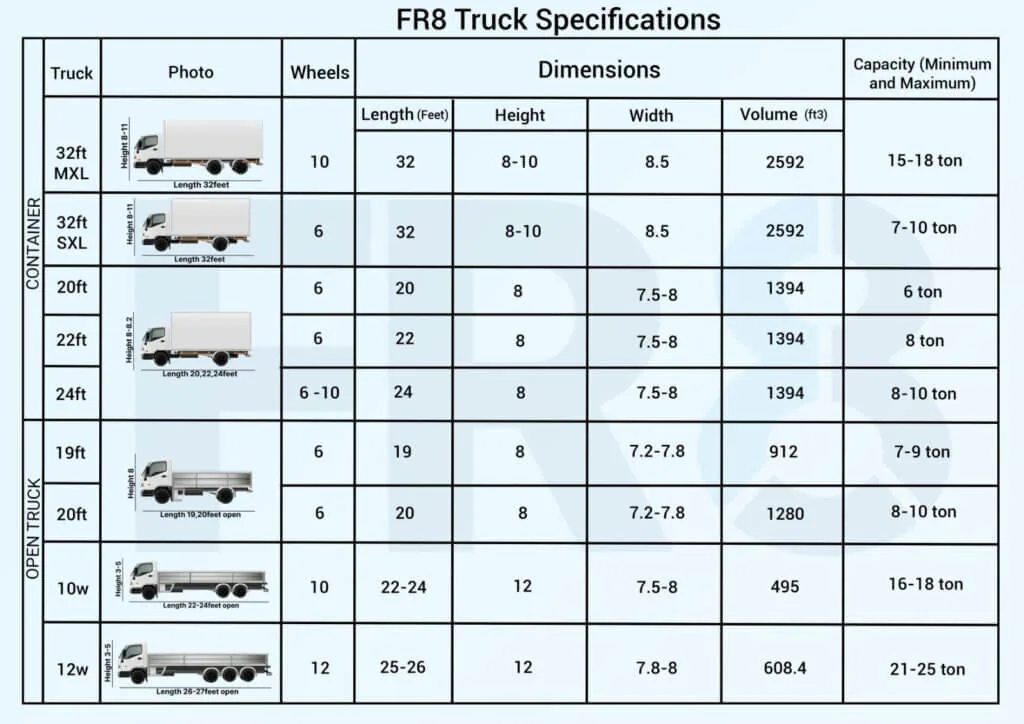
Different truck configurations in India carry different payload capacities based on their GVW ratings and axle types. Understanding these helps in selecting the right vehicle for your cargo needs.
Frequently Asked Questions
1. What is the full form of GVW?
The full form is Gross Vehicle Weight.
2. How to find a truck’s GVW?
Check the manufacturer’s plate fixed on the vehicle chassis or refer to registration documents.
3. Is it legal to exceed the GVW limit?
No. Overloading beyond the permissible GVW is illegal and attracts substantial fines.
4. What is the difference between GVW and GVWR?
GVW represents the actual loaded weight of the truck, whereas GVWR is the manufacturer-rated maximum safe weight limit.
5. What’s the formula for calculating Gross Vehicle Weight (GVW)?
Gross vehicle weight equals unladen weight plus payload.